
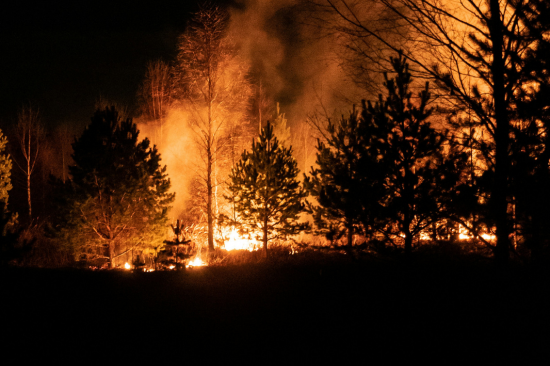
Wildfire risk across Europe is rising as climate change drives longer, warmer, and drier summer conditions, contributing to more frequent and severe fire events. In 2025, the area affected by wildfires in the European Union exceeded one million hectares for the first time since records began, according to the Copernicus European Forest Fire Information System (EFFIS). In four of the last five years, the total burnt area has remained above average, while both the scale and intensity of fires have continued to increase. The increasing number of large-scale fires is creating additional challenges for wildfire risk management.
In response, the European Commission has introduced a new approach to integrated wildfire risk management. This approach aims to bring together multiple policy areas and stakeholders to address wildfire risk in a coordinated manner. It includes areas such as land and forest management, risk communication, civil protection, and research and innovation. The objective is to strengthen cooperation between the European Union, its Member States, and regional authorities in order to better protect both people and ecosystems.
What is the EFFIS?
The European Forest Fire Information System (EFFIS) plays a central role in supporting wildfire monitoring and information-sharing across Europe and neighbouring regions. It provides updated and reliable data on wildfires to national authorities responsible for forest protection, as well as to European institutions, including the European Commission and the European Parliament. Since its establishment in 1998, EFFIS has been supported by a network of experts from 43 countries across Europe, the Middle East, and North Africa, working together through the Expert Group on Forest Fires. As part of the Copernicus Emergency Management Service since 2015, EFFIS contributes to a coordinated approach to wildfire information, including the mapping of fires, which may also reflect controlled burning activities for vegetation management.
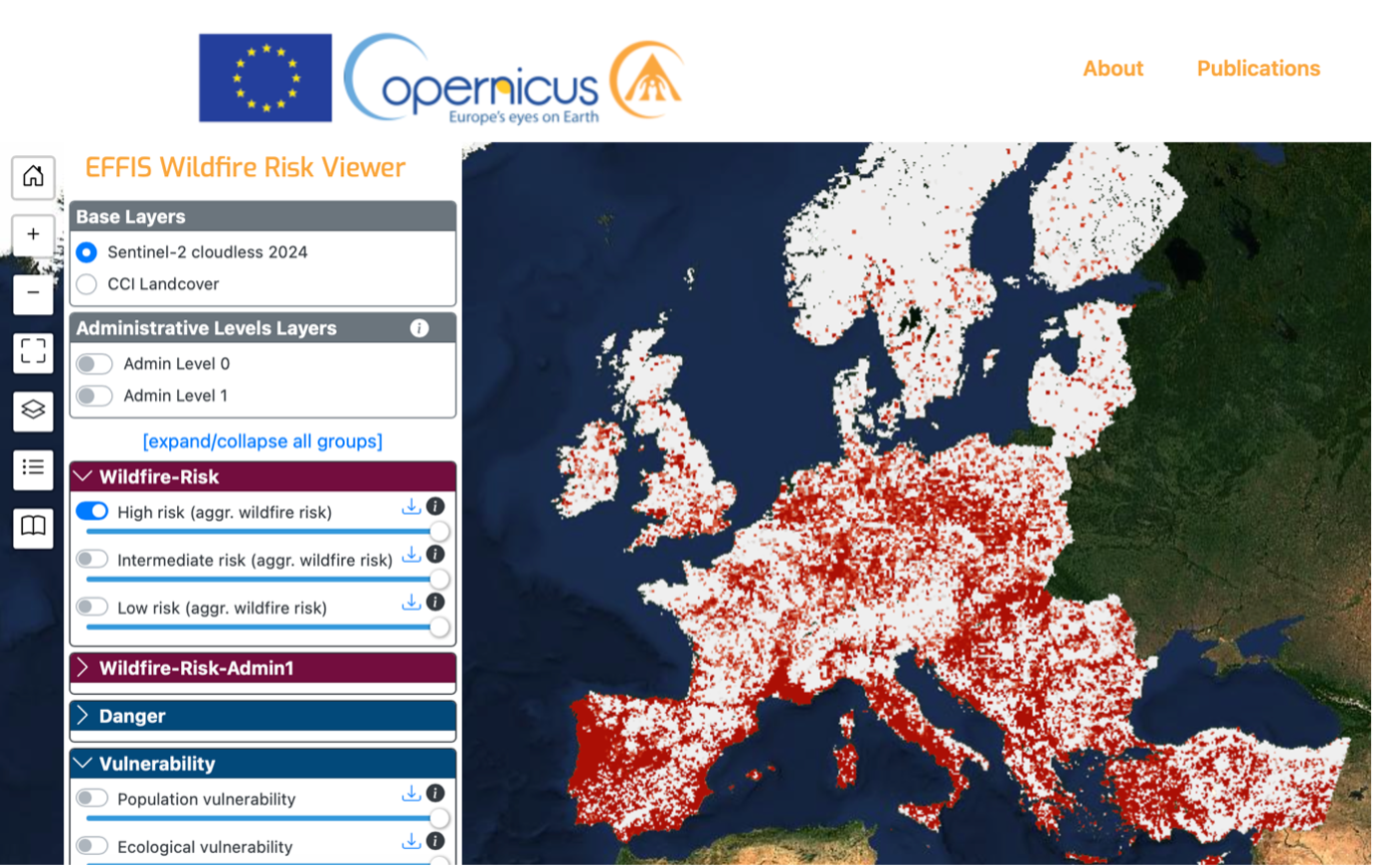
https://forest-fire.emergency.copernicus.eu/apps/fire.risk.viewer/
Building on a Proactive Disaster Management Approach
The proposed measures build on the Preparedness Union Strategy, which promotes a more proactive and coordinated approach to disaster management. This framework encourages cooperation across government sectors and stakeholders to improve anticipation, prevention, and response to emerging risks. By applying these principles, wildfire risk management is addressed through a coordinated approach across government sectors.
Key Areas for Action
The Commission outlines several priority areas to improve wildfire risk management across Europe. These include strengthening ecosystem-based prevention and promoting the development of fire-resilient landscapes. Enhancing preparedness is another key focus, with improvements in risk assessment, forecasting, and knowledge-sharing identified as essential components.
The approach also emphasises increasing public awareness and preparedness, as well as strengthening early warning and response systems. In addition, support for post-fire recovery and ecosystem restoration forms part of the broader strategy. Together, these actions aim to improve both prevention and response capacities at national and EU levels, while also supporting international cooperation and dialogue on wildfire risk management.
Improving Risk Assessment and Data Availability
Efforts to improve wildfire risk assessment focus on enhancing the availability and use of data. The Commission plans to further develop EFFIS by improving access to near real-time information derived from both European and international satellite sources. This will support better situational awareness for Member States and the public.
In addition, the development of standardised risk modelling is intended to help countries prioritise prevention measures more effectively. Guidance will also be provided to support the integration of wildfire risk into national reporting systems, contributing to a more consistent approach across the European Union.
Investing in Prevention and Preparedness
The communication does not introduce additional financial obligations for Member States. Instead, it aims to improve the efficiency of wildfire management efforts. At the same time, it highlights the need for continued investment over the long term in prevention, preparedness, response, and recovery.
Strengthening investment in prevention and preparedness is expected to reduce both the costs associated with firefighting operations and the overall damage caused by wildfires. This approach recognises that addressing wildfire risk requires continuous effort and long-term planning.
The Role of Public Awareness and Education
Communities play a central role in wildfire prevention and management. A large majority of wildfires in the European Union are linked to human activity, making awareness and preparedness essential components of risk reduction.
To support this, the Commission proposes measures to promote good practices in wildfire awareness and community engagement. These include knowledge-sharing through existing networks, the development of tools to support resilience in areas where urban and natural environments meet, and the promotion of volunteering and exchange initiatives related to preparedness.
Engagement with citizens is also being strengthened through dedicated platforms and initiatives aimed at gathering input and raising awareness on wildfire risks.
Expanding Response Capacity and Strengthening Cooperation
As part of efforts to enhance response capabilities, the European Commission is expanding the rescEU firefighting fleet. This includes the procurement of additional firefighting aircraft and helicopters, which will be hosted across several Member States. The first helicopters are expected to become operational in 2026, followed by aircraft deployments in 2028.
In parallel, a new European firefighting hub is being established in Cyprus. The hub will support both operational response to wildfire emergencies and capacity-building activities. It is also expected to contribute to training, preparedness, and cooperation with neighbouring countries, supporting broader regional resilience to wildfire risks.
Learn more about EFFIS here: https://forest-fire.emergency.copernicus.eu
Read the original article here: https://reliefweb.int/report/world/questions-and-answers-integrated-wildfire-risk-management
